

At some point during kindergarten, children begin hurling insults at one another.
“You’re stupid!”
“No, you’re stupid!”
“You’re twice as stupid!”
“You’re ten times as stupid!”
After this has gone back and forth a few times, one of the children finally has a brilliant idea:
“Always one more than you!”
This is the first legal thought to pass through the mind of a young child. Instead of making a claim about a specific individual case (“You’re ten times as stupid”), this child attempts to establish a general rule (“You’re always one more degree stupid”). By establishing this rule, the child seeks to resolve, at a higher level, the stalemate of mutually escalating assertions and counterassertions (“You’re twice as stupid,” “ten times as stupid,” and so on), using the logic derived from the semantic meaning of the rule, and to do so in favour of the party establishing the rule. If the other child is always one degree stupider, it logically follows that the other child must always be the stupider one, regardless of how many times the two contestants have already multiplied their respective degrees of stupidity. Since the entire contest is about comparative, rather than absolute stupidity, that is sufficient.
It remains sufficient until the other child says: “Always twice as many more than you!”
What applies now? Is the second child always one degree stupider, while the first child is always twice as stupid, with the result that the second child is always one more degree stupid than twice as stupid as one more degree stupid?
The reciprocal establishment of rules has thus merely shifted the stalemate to a more general level.
At this point, four-year-olds have reached the limits of their capacity for abstraction. Either the kindergarten teacher intervenes, or the next level of escalation consists of a punch on the nose.
Among adults, however, things go a little further. They move to the next meta-level and establish rules governing the establishment of rules: constitutions. In several dozen articles, adults lay down who is entitled to determine when, and in what manner, someone is stupid. The basic idea is that, although we cannot agree on who is stupid, we can at least agree on a set of procedures. Or, more precisely, we might not even be able to agree on the procedures, but at some point someone had the power (through violence) to establish such procedures, and at least we cannot agree on how to depart from them, while at the same time being unwilling to entrust that decision simply to force (once again).
And it works. For a while.
Even if it may seem like a conjuring trick, abstraction can be used to resolve disputes authoritatively at ever more general levels. This is possible because the individual dispute is usually not worth attacking the entire system over. In democratic states, there is an additional promise: after the next election, the other side might come to power and change the rule again. Democratic power exercised for a limited term and constrained by legal rules: that is what is meant by a democratic constitutional state governed by the rule of law. The whole arrangement works as long as all relevant participants agree on the important questions. Once that is no longer the case, political polarisation causes the democratic rule-of-law state to disintegrate through its own internal logic. This is currently observable throughout the Western world, but nowhere more so than in Poland. Professor Rieck recently examined the Polish constitutional dispute in greater detail.1 The most important point of Rieck’s analysis is that the legal order, and even more so the constitutional order, does not derive its validity from itself, but rather from the fact that:
All participants have an incentive to abide by it, even when doing so puts them at a disadvantage in a particular situation.
Individuals who nevertheless wish to violate it are restrained and sanctioned by everyone else, who resist such violations because they have an incentive to do so.
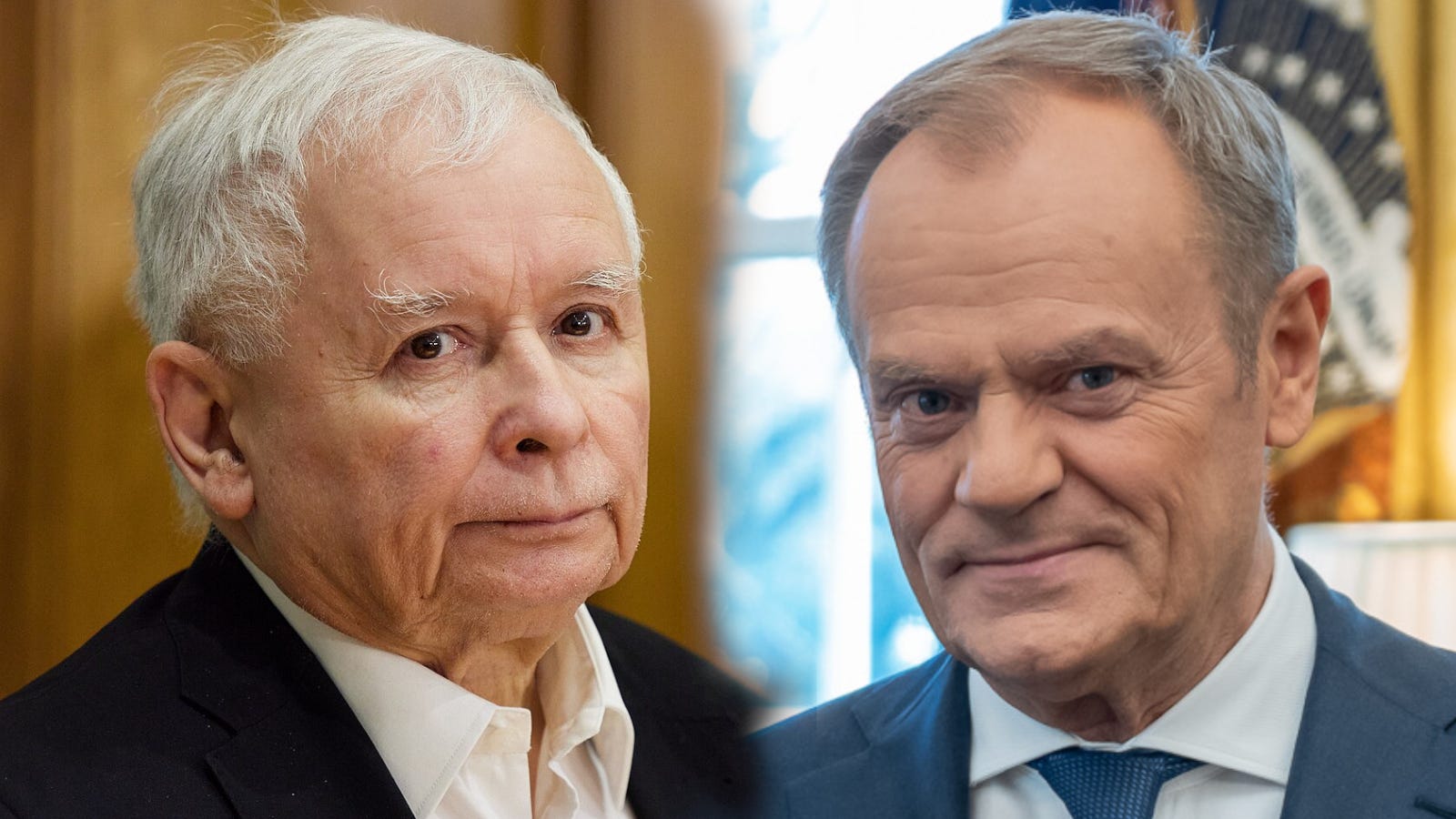
Rieck interprets the Polish constitutional crisis as a cautionary example of what happens when the actors in a political system escalate their mutual violations of the rules. He identifies the original sin as lying with the PO, the party of current Prime Minister Donald Tusk. Since 2026, it has evolved from an electoral alliance into a political party and been renamed KO. In 2015, shortly before the election, the PO attempted to fill more Constitutional Tribunal seats than were actually vacant at the time. Rieck, however, accuses PiS of making both a legal and a strategic mistake: rather than limiting itself to overturning the appointments to the two seats that had been filled unconstitutionally, it declared the entire judicial election conducted by the previous parliament invalid and also filled three seats with judges close to PiS, even though those appointments fell within the legislative term of the previous, PO-dominated parliament. In this respect, Rieck takes a position similar to that of other commentators on the Polish constitutional dispute, such as Gerhard Vierfuß.2
I believe that Professor Rieck is inconsistent in his game-theoretical analysis here. If one consistently views the Polish judiciary as a group of veto players, one cannot avoid concluding that PiS may have made tactical mistakes but fundamentally pursued a rational strategy that dramatically improved its position. It was precisely the strong position PiS gained through its policies that made an attempted coup, from Donald Tusk’s perspective, necessary in the first place.
Let us therefore take a closer look at the Polish example.
[For the second part, please subscribe to “Fragen zur Zeit”. A full subscription costs just €7 per month, and you no longer need a credit card. I am spelling this out here because people keep telling me that, simply because I do not put the paywall after the first five lines, they assume the text has ended.]


