

The University of Cambridge got lucky. Jason Arday is dead. Most likely suicide. Instead of investigations, there will now be a martyr story.
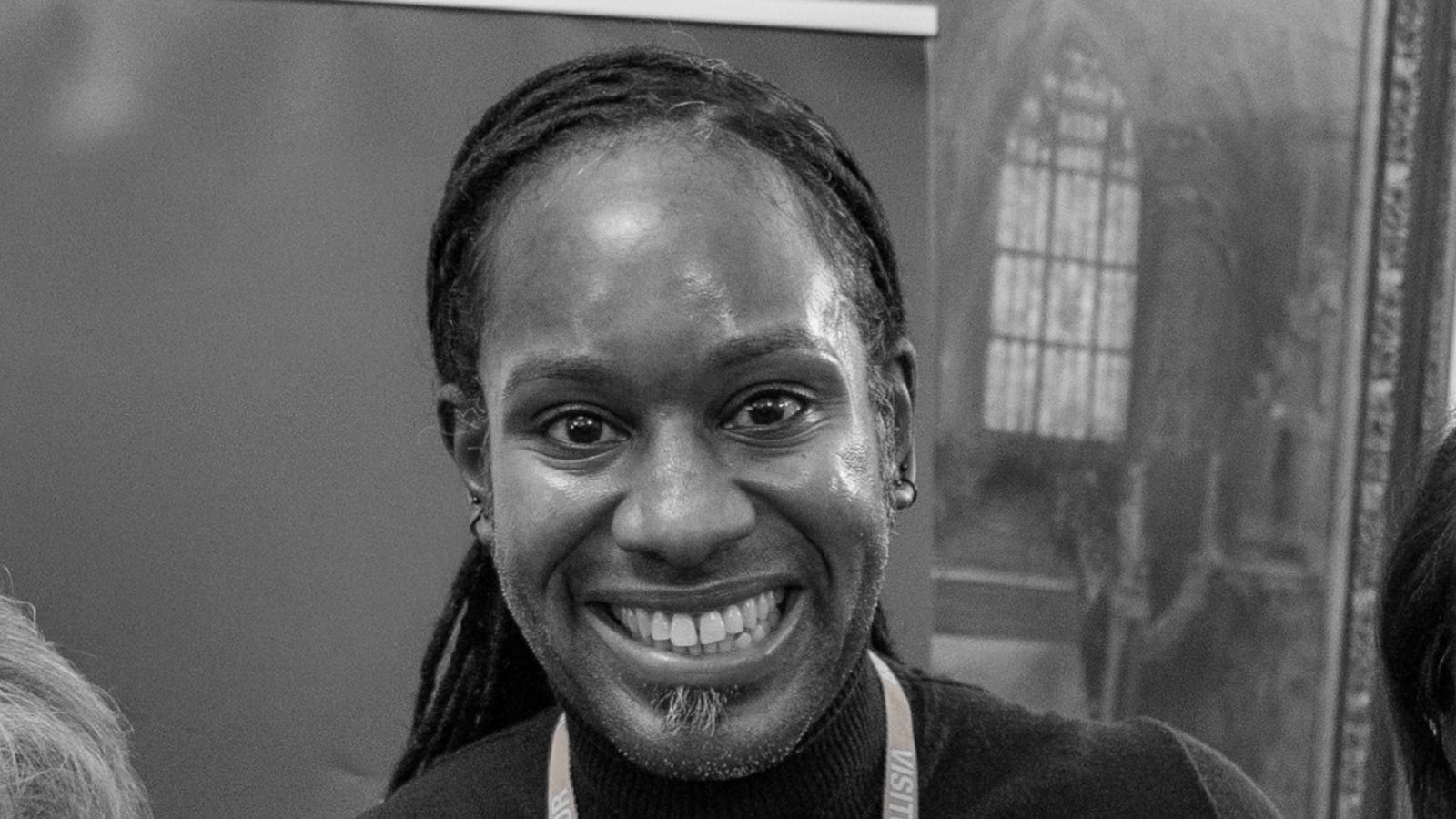
(Jason Arday 2024: ConiferousForest19, CC0, via Wikimedia Commons)
.jpg)
Let me say it straight to the tearful hypocrites: Jason Arday lied so brazenly about his life story and his achievements that he would not even have been admitted to the North Rhine-Westphalia branch of the AfD. The copy-and-paste dissertation of this Dr. Summa Cum Fraude is merely the cherry on top. The lies range from alleged sporting achievements (30 marathons in 35 days) to the banalities of his CV. Nathan Cofnas1 and Edward Dutton2 have said everything there is to say on this subject.
This leaves only two possible interpretations of Arday’s life story: either he was a ruthless fraud. In that case, we must feel sorry for his relatives, above all the two children he leaves behind. He himself can then expect very little sympathy indeed. Or he was so psychologically unstable that he should have been regarded as legally incapable of being held responsible for his fraud. Professor Simon Baron-Cohen, Arday’s Cambridge colleague, was already pointing towards the latter interpretation two weeks ago: “We should of course always investigate plagiarism to protect academic standards. However, I cannot stand by and watch when an autistic man is on the ground and the kicking continues.”3
Now, if that is the case, then the moral responsibility lies solely with the people at Cambridge, Simon Baron-Cohen and his colleagues, who in that case would have kept a mentally ill person as a diversity hire. But they are responsible either way. The only question is whether Jason Arday himself is culpable of the fraud committed and this question is no longer under the jurisdiction of any earthly judge. There was not the slightest doubt that he was a diversity hire. The first sentence of the University of Cambridge’s announcement of Arday’s appointment as a professor reads: “Arday is a highly respected scholar of race, inequality and education, with a particular interest in improving the representation of Black, Asian and Minority Ethnic people in higher education.”4
Just to make one thing clear from the outset: “improving the representation of Black, Asian and Minority Ethnic people” means nothing other than that these people receive places at universities and eventually professorships despite lower levels of performance, positions that would otherwise have gone to white people. Like insurance fraud or tax evasion, Diversity, Equity and Inclusion is not a victimless crime simply because the victims are not visible. These are real lives of real people that have been shattered and continue to be shattered as a result. Jacob Savage has listed the damage in sufficient detail.5 For many white men of the Millennial generation, this damage can never be repaired. Life has moved on, and the period in which they would have had to make their breakthrough has passed. And we have not even got to those like Nathan Cofnas who nevertheless made it and were then cancelled.
The fact that precisely those who celebrated the mob at the university as political engagement are now complaining about a smear campaign is one thing. Had Arday been a cunning fraudster, a modern-day Comte de Saint Germain leading the cleverest minds of his time by the nose, then the whining of his supporters would simply be embarrassing. But once one understands that all these people must have known what was really behind Arday’s alleged achievements, and after Nathan Cofnas’s publications, there can no longer be any doubt about that, it suddenly takes on a very sinister character.
Here, one has to distinguish between Arday’s family and his colleagues. Even though both make the same claim, namely that Arday was driven to his death by a campaign of lies, the two cases are not the same. As far as his family is concerned, one has to grant them the right to maintain a comforting lie about his life. Particularly since Arday leaves behind two children. Should one now tell them: “Your father was a fraud and a narcissist, and when his fraud was exposed, he killed himself?” I think that question answers itself.
It is an entirely different matter when it comes to Arday’s academic colleagues. The BBC has published a video featuring one such man, that is nauseating. Strangely enough, his face is shown, but his name is not given. This man presents himself as a personal friend who was in contact with Arday until shortly before his death, and tells us how the campaign against him affected Arday and how terrible the media frenzy was. He also tells us that he himself received around a hundred press inquiries asking whether he could comment on Arday’s CV.
How about the gentleman starts with precisely that? We must not allow these people to hide behind the pose of grieving friends and colleagues. At Cambridge, people knew about Arday’s fraud, and they covered it up. The people who are grieving now are also the great beneficiaries of Arday’s death. Because you do not put a corpse on trial. And where there is no trial, the other corpses remain in their closets as well.